
Teaching AI Literacy: Building Future-Ready Learners
AI literacy is no longer optional. Here is how institutions can equip students with the knowledge and skills to use AI responsibly and effectively.

Why AI Literacy Matters Now
As generative AI tools enter classrooms, offices and everyday life, the ability to understand, evaluate and work with AI has become a core skill. Institutions that embed AI literacy into their curriculum are preparing students not just for their first job, but for a lifetime of technological change.
From Awareness to Application
AI literacy goes beyond knowing what AI is. It means knowing when to use it, how to prompt it well, how to check its outputs, and how to stay critical of its limitations. A practical curriculum moves learners through three stages: understanding core concepts, hands-on practice, and ethical reflection.
Hands-on labs are especially effective. When students build, test and debug small AI projects, they develop intuition that no lecture can replace.
Building an AI-Ready Campus
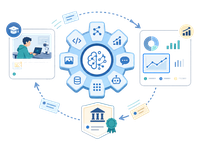
A successful AI literacy program pairs great content with the right platform. Institutions need a learning management environment that supports interactive labs, tracks real skill development, and issues verifiable credentials. EDU360 Cloud provides exactly this — a complete platform to deliver AI courses, run hands-on labs, and certify real skills.
By making AI literacy a graduation-level competency, universities can ensure every student leaves with the confidence to thrive in an AI-augmented world.
